If you've ever wondered why some peppers make your eyes water while others barely register, the answer lies in the Scoville scale. This guide breaks down everything you need to know about measuring heat.
What is the Scoville Scale?
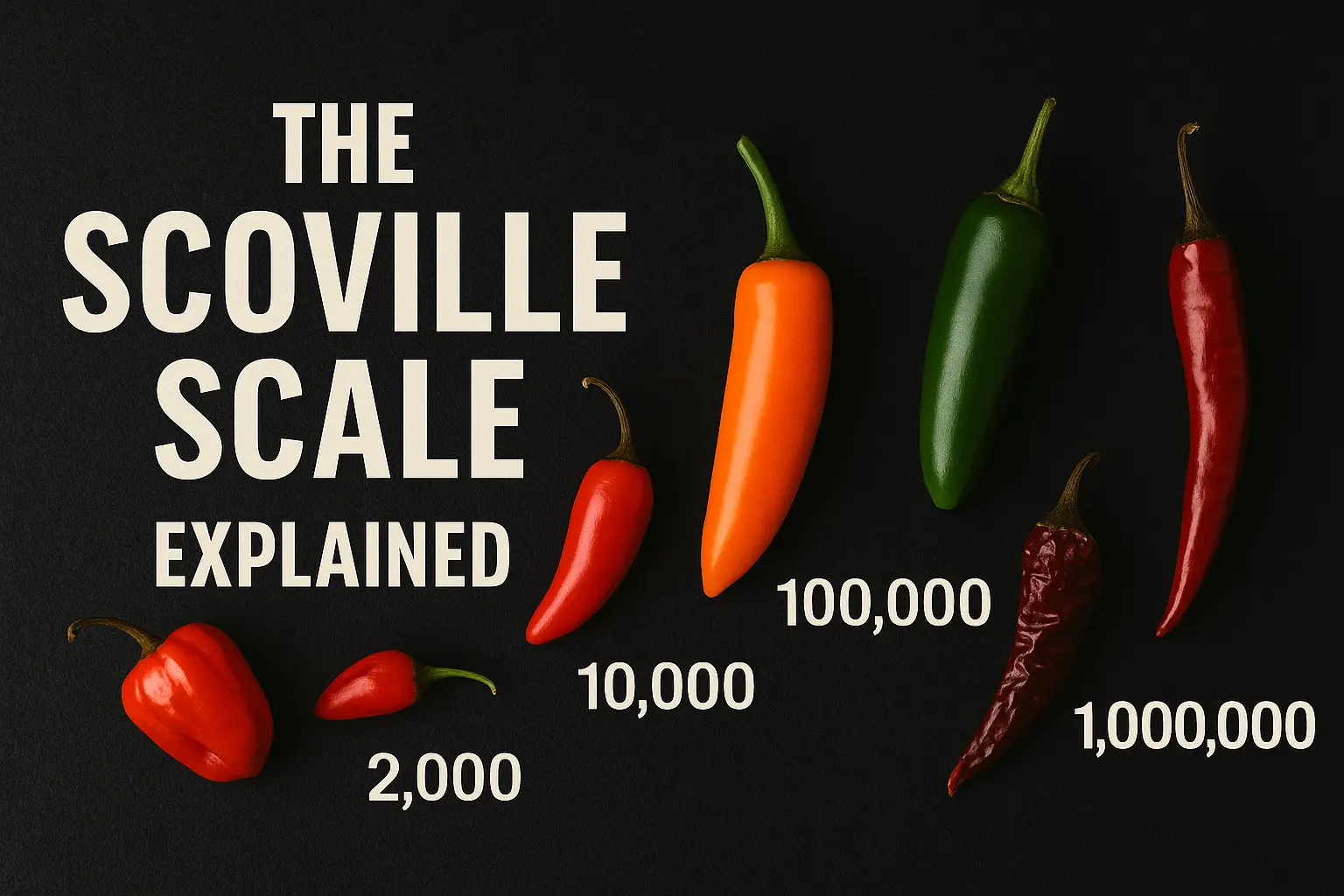
The Scoville scale measures the pungency (spiciness) of chili peppers and other spicy foods. It was created in 1912 by American pharmacist Wilbur Scoville and is measured in Scoville Heat Units (SHU).
How It Works
Originally, the test involved diluting pepper extract with sugar water until a panel of tasters could no longer detect heat. The number of dilutions needed became the SHU rating. Today, we use high-performance liquid chromatography (HPLC) for more accurate measurements.
The Scale Breakdown
0-5,000 SHU: Mild
- Bell Pepper: 0 SHU
- Banana Pepper: 0-500 SHU
- Poblano: 1,000-2,000 SHU
- Anaheim: 500-2,500 SHU
5,000-50,000 SHU: Medium
- Jalapeño: 2,500-8,000 SHU
- Serrano: 10,000-25,000 SHU
- Cayenne: 30,000-50,000 SHU
50,000-350,000 SHU: Hot
- Tabasco: 30,000-50,000 SHU
- Thai Chili: 50,000-100,000 SHU
- Habanero: 100,000-350,000 SHU
350,000-1,000,000 SHU: Extra Hot
- Scotch Bonnet: 100,000-350,000 SHU
- Ghost Pepper (Bhut Jolokia): 855,000-1,041,427 SHU
1,000,000+ SHU: Extreme
- Trinidad Scorpion: 1,200,000-2,000,000 SHU
- Carolina Reaper: 1,400,000-2,200,000 SHU
- Pepper X: 2,693,000+ SHU
What Causes the Heat?
Capsaicin is the compound responsible for the burning sensation. It binds to pain receptors in your mouth called TRPV1 receptors—the same ones that respond to actual heat. That's why spicy food literally feels "hot."
Building Tolerance
Your capsaicin receptors can become desensitized with regular exposure. This is why spice lovers can handle more heat over time. The receptors never fully reset, so tolerance is relatively permanent (though it can decrease with abstinence).
Finding Your Level
At Hellbound, we rate all our sauces on a 1-5 flame scale:
- 🔥 Mild: Everyday heat
- 🔥🔥 Medium: Noticeable kick
- 🔥🔥🔥 Hot: For heat seekers
- 🔥🔥🔥🔥 Extra Hot: Serious heat
- 🔥🔥🔥🔥🔥 Extreme: Enter at your own risk
Take our Heat Quiz on the Heat Guide page to find your perfect level!